
How to Find Influencers for Your Brand

The fastest way to find influencers for your brand is to search by who follows a creator, not just what that creator posts about. Five methods get you there, in rough order of scale: (1) manual hashtag and location search, (2) reverse-engineering competitors' tagged creators, (3) native platform marketplaces, (4) paid influencer databases, and (5) audience-first search tools that filter by follower demographics. Which one is right comes down to your budget and how many creators you need — the rest of this piece breaks that down.
Most brands find influencers the way they'd find a wedding photographer: search a hashtag, scroll a while, DM whoever looks the part. That process finds creators who talk about your category. It does nothing to confirm their followers are the people who'll buy from you. Those are different problems, and conflating them is why so many influencer campaigns post great content and move zero revenue.
Why most brands search for influencers backwards
Picture a regional parenting brand (bibs, bottle warmers, that kind of thing) choosing between two creators. Creator A has 40,000 followers, posts from a mid-size metro, and her audience skews 72% women aged 25-40, most of them local. Creator B has 400,000 followers, posts polished lifestyle content, and her audience is 60% male and scattered across a dozen countries.
Every instinct built on hashtag search and follower count says pick Creator B. Bigger number, safer bet. But Creator B's audience isn't the buyer. Creator A's is. The brand that picks based on the creator's content niche gets reach; the brand that picks based on the creator's audience composition gets customers.
The method you use to find influencers matters less than whether it lets you filter by who follows a creator, not just what the creator posts about. Hashtag search, competitor-spying, and native marketplaces all search creator attributes: niche, bio, past brand deals, follower count. None tell you the follower breakdown by age, gender, or location. Rank the five common methods on that axis, and the "best" one stops being about budget and becomes about how early in the process you get real audience data.
Method 1: Manual hashtag and location search
Almost everyone starts here, and it costs nothing but time.
Search your branded hashtag and your product category's hashtags. Browse geotagged location tags — a city, a neighborhood, a venue type — on Instagram and TikTok. Check the "tagged" tab on your own profile and on competitors', since people who've already tagged a brand in your space are self-selecting into relevance.
Budget a few hours for a first pass to build a short list worth a second look, skipping anything with obvious bot-follower patterns or dead engagement.
The limitation is structural, not a matter of trying harder. Hashtag and location search surfaces recent public activity: what someone posted, where, using what tags. It tells you nothing about who's on the other end of that follower count. You're inferring audience fit from bio text, caption tone, and a raw number, which means you're guessing. A creator with 40,000 followers and a bio that says "mom of two, Denver" might have an audience that's 80% Denver moms or 80% teenage boys who found her through a viral video two years ago. The hashtag search can't tell the difference.
Method 2: Reverse-engineer your competitors' creators
Smarter than starting cold, and still free.
Look at who tags your competitors in user-generated content. Search their branded hashtag — most DTC brands run one consistently enough that it surfaces every creator they've worked with in the last year. Then check the Meta Ad Library and TikTok Creative Center, both public and free, to see which creator content your competitors are actually paying to boost as ads. That last signal is the strongest one here: brands don't spend media budget behind content that flopped.
A creator who already converted for a brand adjacent to yours has done the category-fit work for you. You're not guessing whether a skincare creator can sell skincare; you have proof.
You're not the only one running this search, either. Once a creator shows up tagged by three competitors in your category, every other brand watching that space has probably found them too. That's how a handful of "safe," proven creators end up quoting noticeably higher rates than a similarly-sized but less-discovered account would — they've become the consensus pick, and consensus picks get bid up.
Method 3: Native platform search and creator marketplaces
Instagram runs its own Creator Marketplace, YouTube has BrandConnect, and TikTok has folded its brand-creator tools into TikTok One. These let you search and contract creators directly inside the platform, with built-in payment protection and campaign tracking.
The constraint is who's in the pool. These marketplaces only surface creators who've opted in: a fraction of each platform's active creator base, and the ones already comfortable with brand deals and formal contracts. Each tool also covers only its own platform, so a marketplace search on TikTok tells you nothing about who that creator's audience looks like on Instagram, if they're even active there.
For a first paid test of 3-5 creators on a modest budget, a native marketplace is the right call — you need its contract and payment protection more than you need reach. It's the wrong call the moment you're trying to build a real program. A pool that's opt-in by design and siloed by platform can't support the volume or the cross-platform view a scaling creator program needs.
Method 4: Paid influencer databases and search tools
Manual search and native marketplaces both cap out around a few hundred realistic candidates before the returns flatten. A real always-on influencer program — the kind running multiple campaigns a quarter — needs a candidate pool in the thousands, filtered fast enough that research doesn't eat your whole week.
That's the gap paid databases fill. The two tools brands most often put up against Yoloco in this category are Modash and HypeAuditor; see Yoloco vs Modash and Yoloco vs HypeAuditor for direct comparisons.
When evaluating any tool in this category, four things actually matter:
- Database size — What to check: How many creators, across how many platforms
- Audience-filter depth — What to check: Can you filter by follower age/gender/geo, or just creator bio and category tags?
- Contact and vetting data — What to check: Are emails and fraud/fake-follower checks included, or a separate add-on?
- Pricing model — What to check: Per seat, per search, or per export — this changes the real cost at your volume
The second row is the one brands skip and regret. A database with 50 million creators and only bio-level filters is just a faster version of Method 1.
Method 5: Audience-first search — filter by who follows them, not who they are
Here the search itself flips. Instead of typing "fitness influencers" and scrolling bios, you search for creators whose followers match a profile: women 25-34, based in the US, with an affinity for home cooking. The audience data is the query, not a post-search sanity check.
Influencer Explorer is built around this — a database of 400M+ creators searchable by follower demographics and interests, not just creator-side tags.
Take a meal-kit brand chasing that same kind of buyer. Filter for an audience that's 50%+ female, aged 25-44, US-based. What surfaces isn't a list of "food influencers." It's cooking creators, sure, but also parenting creators whose followers are exhausted weeknight cooks, and budgeting creators whose audience is price-sensitive grocery shoppers — several of them under 20,000 followers, invisible to any hashtag search because their content isn't tagged #mealprep.
Follower count and niche label are proxies for reach. Audience composition is the actual buying criterion. Every other method on this list treats audience match as something you verify after you've already built a shortlist by other means.
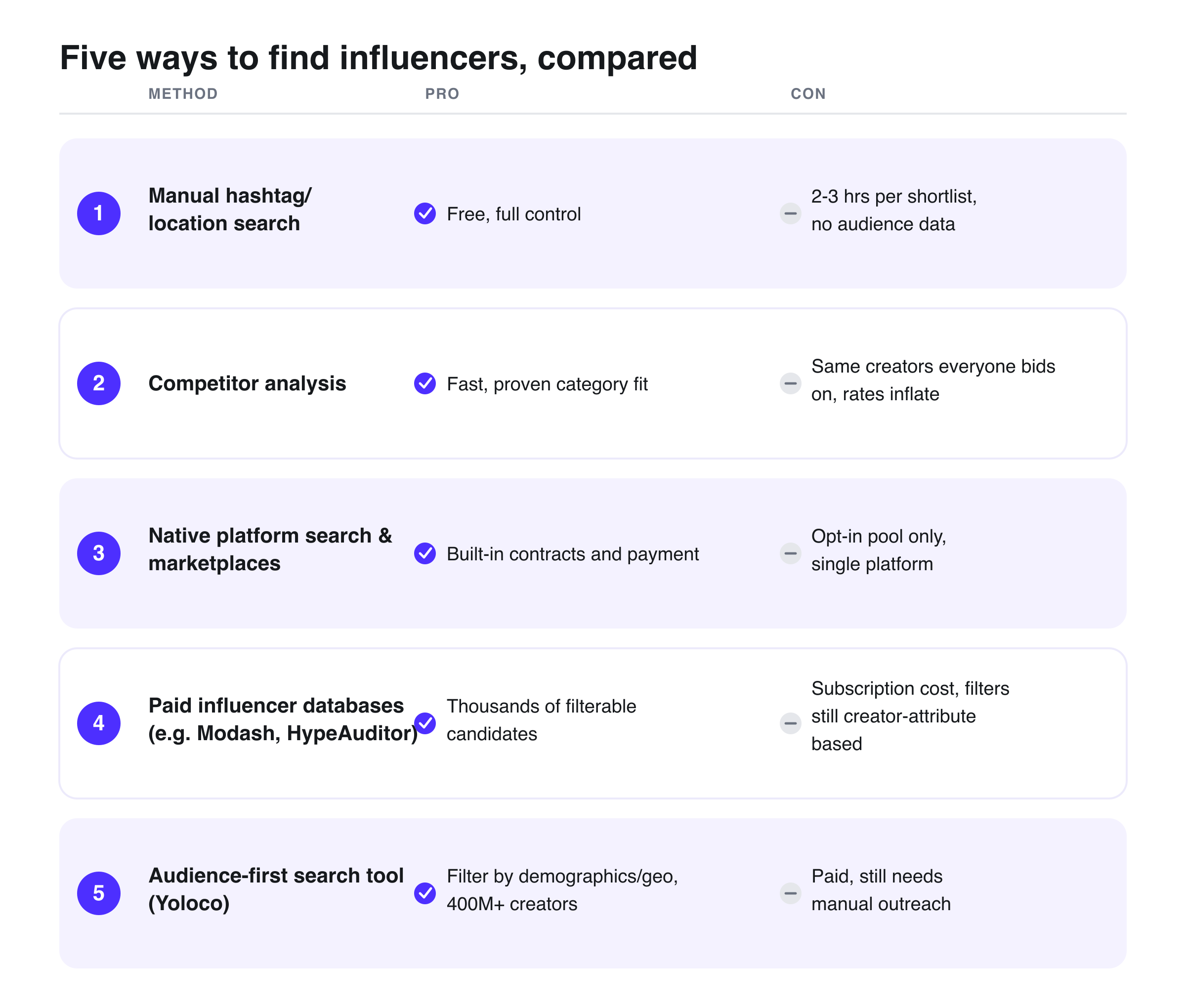
Five ways to find influencers for your brand, compared
How to vet a shortlist before you spend a dollar
Whichever method built your list, run it through the same checks before any money moves.
- Audience geography match. A reasonable rule of thumb: if more than 20% of an account's followers sit outside the countries where you actually sell, treat it as a mismatch. No amount of good content fixes a geography problem.
- Audience age/gender match against your actual customer profile, not your assumed one.
- Follower growth pattern. A steady climb is normal; a sudden spike followed by a plateau usually means a bought batch of followers, not a viral moment that stuck.
Engagement rate belongs here too, but as one screening step, not a scorecard you optimize against — run it once through the engagement rate calculator and move on. For anything past that single check — real audience quality, geography breakdowns, verified contact details — that's where you vet their audience quality before outreach, not after the invoice.
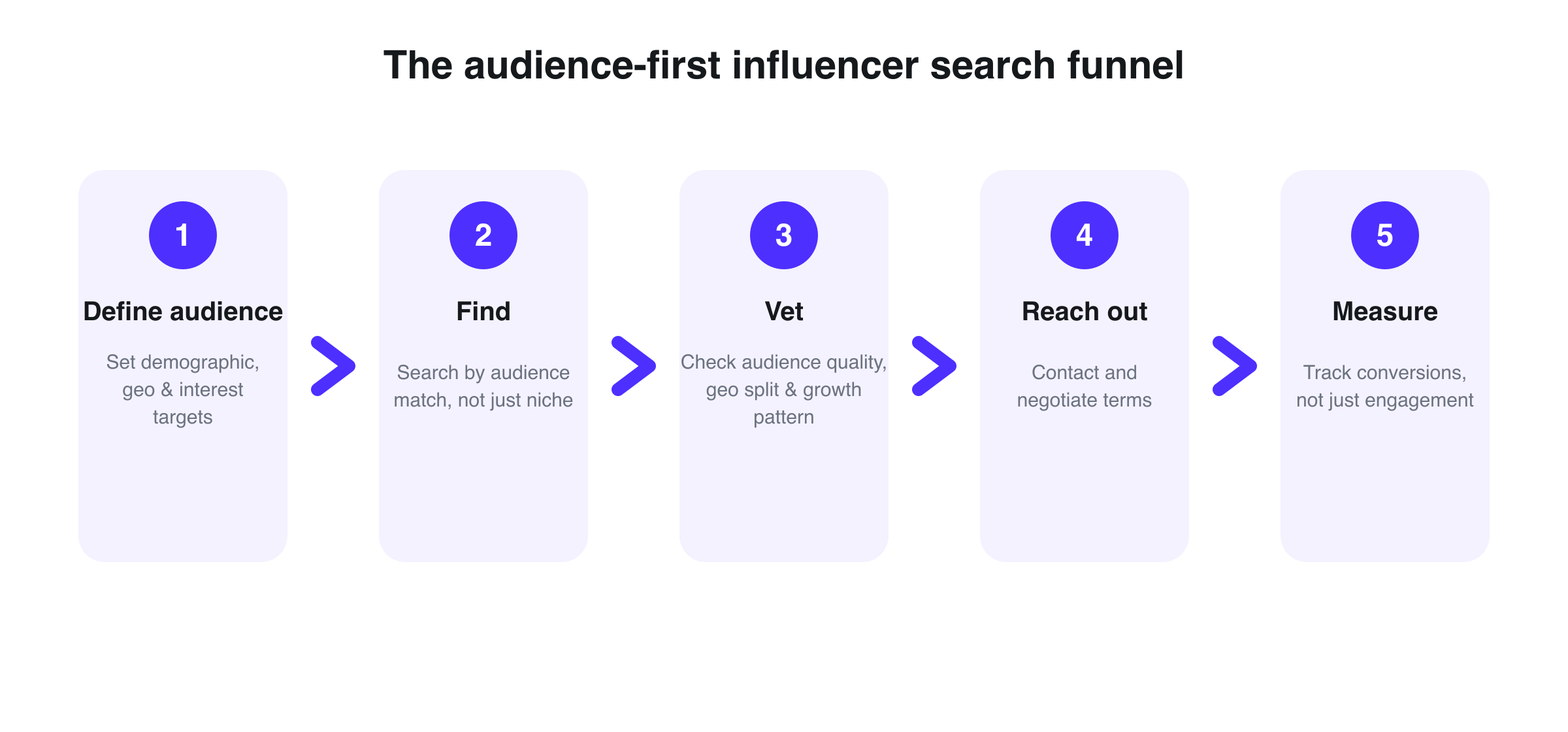
The audience-first influencer search funnel
Which method to use, by budget and stage
- Testing with one creator, no budget: manual hashtag and competitor search. Free, and one good creator doesn't require a database subscription.
- First paid test, 3-5 creators: native marketplace. The built-in payment protection and contracts matter more than reach at this scale.
- Scaling to 20-50+ creators, or running quarterly campaigns: an audience-first search tool. Manual research doesn't scale past a handful of properly vetted names per week, and at 20+ creators per quarter you'll spend more hours scrolling than the tool costs.
Rule of thumb: once finding and vetting creators eats more than a day a week of someone's time, a paid tool has already paid for itself in hours saved, before it produces a single better match.
FAQ
How do I find influencers for my brand for free?
Manual hashtag and location search, plus reverse-engineering competitors' tagged creators and branded hashtags, cost nothing but time. Budget a few hours for a first shortlist, and check the Meta Ad Library and TikTok Creative Center for free visibility into who competitors are paying to promote.
How do you find influencers by audience instead of niche?
Niche search filters by what the creator posts about: bio, hashtags, category. Audience search targets who actually follows them — age, gender, location, interests. A creator can sit squarely "in your niche" and still have an audience that doesn't match your buyer at all, which is why audience filters (Method 5) beat category filters for finding creators who convert.
How do I find Instagram influencers specifically?
Start with branded and category hashtag search plus geotagged location tags directly on Instagram (Method 1), or filter Influencer Explorer to Instagram-only creators when you want audience demographics instead of guessing from bios.
How many influencers should a brand start with?
Start with 3-5 for a first paid test. That's enough to compare performance across creators without spreading budget too thin to learn anything, and it matches what native marketplaces are built to handle.
Is TikTok Creator Marketplace or Instagram Creator Marketplace worth using?
Yes, for a first paid campaign where you want built-in contracts and payment protection. Not as your only sourcing method long-term — both only include creators who've opted into that specific platform's tools, which is a small, single-channel slice of the creators actually available.
How do I find micro-influencers on a small budget?
Audience-first search tools surface micro-influencers that hashtag search misses entirely, because a 15,000-follower creator with a tightly matched audience rarely ranks high in a manual hashtag scroll. Filtering by audience demographics rather than follower count is how you find them without paying for reach you don't need.
What's the fastest way to find influencers who already reach my target customer?
Search by audience composition directly rather than by creator niche or follower count. That's the mechanic behind Influencer Explorer: you specify the audience profile you're trying to reach, and the tool returns creators whose followers actually match it, instead of creators who merely post about your category.
Similar articles

How to Vet Influencers Before You Pay: A 6-Point Checklist
Every media kit you get from a creator is a sales document. It's built to close the deal, not to inform your decision,...

Micro-Influencer Marketing: Why Smaller Creators Convert, and How to Run a Program
A $300 post from a 35,000-follower baking creator will often outperform a $50,000 post from a celebrity with 2...
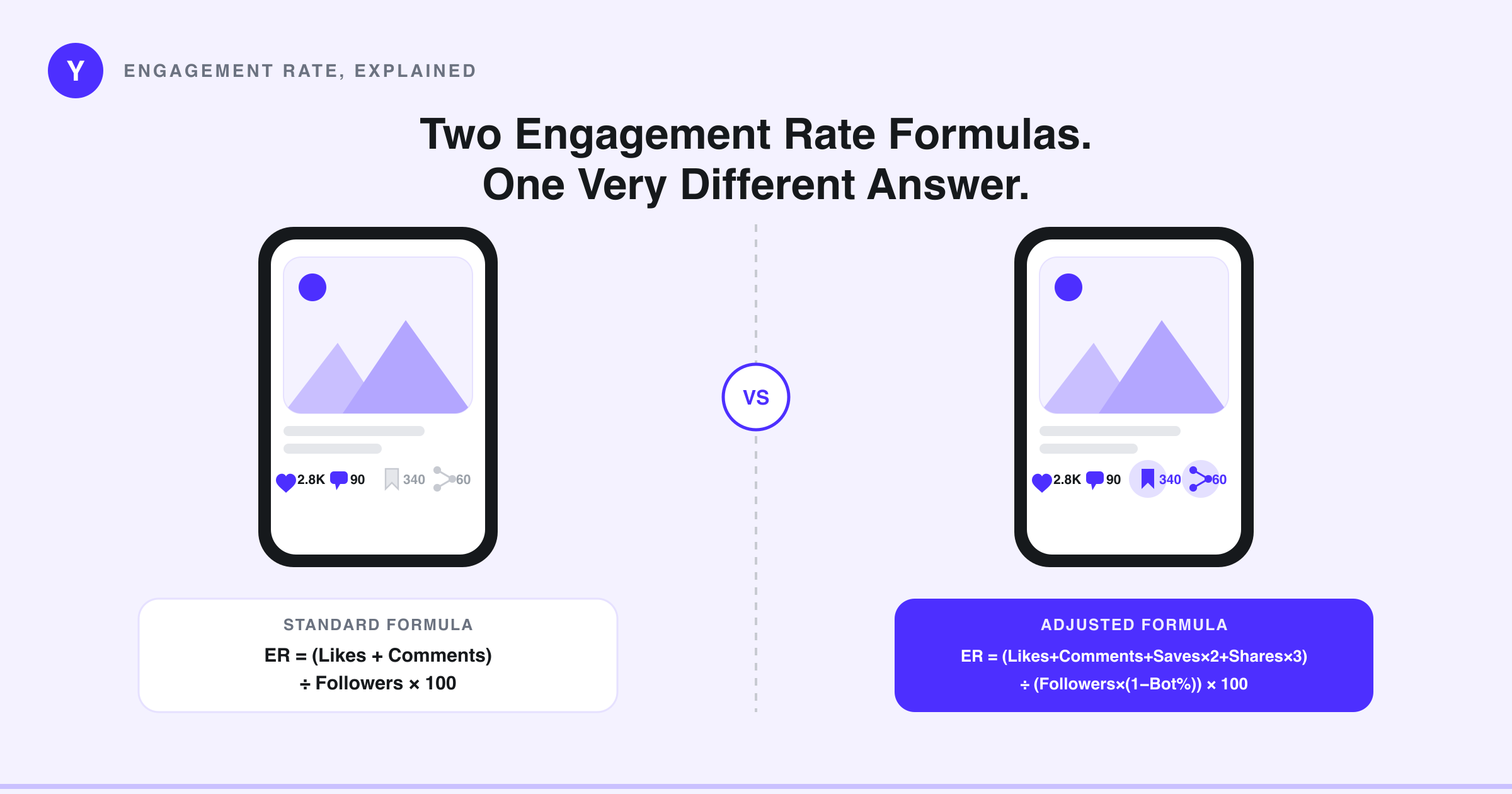
How to Calculate Engagement Rate (The Formula Most Guides Get Wrong)
Most engagement rate calculators give you a single number and let you believe it. Plug in likes, comments, followers,...
Find creators who actually move your audience
Define any audience, get the creators who really influence it — with engagement and audience quality up front. Free to start.